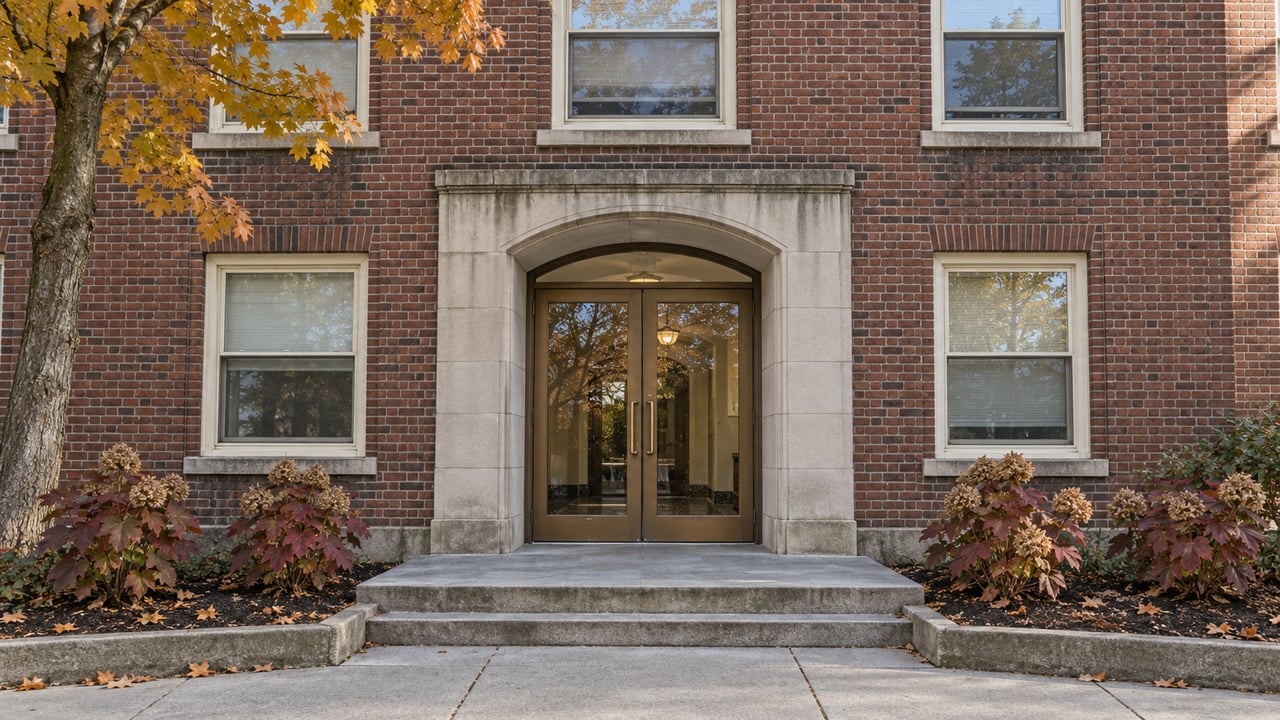
On Garth Road, the Co-op Price Is the Smallest Number in the Deal
October 29, 2026
October 29, 2026
When you buy a co-op in Eastchester's Garth Road district, the price and the maintenance are on the listing, and you'll know both before you make an offer. Neither one decides whether you get in. The board does, and it decides mostly on four numbers: minimum income, credit (FICO) score, debt-to-income ratio, and post-closing reserves. Meet them and your application has a strong footing. Fall short on any one and a well-priced offer can still end in a rejection. Those are the numbers to check first.
Westchester County requires co-op boards to show their financial expectations up front. Under Section 700.21-a of the Westchester County Fair Housing Law, applications to buy cooperative shares must disclose the board's minimum financial qualifications. If a board has no formal minimums, it has to disclose its preferred ones: minimum income, total assets and credit score, maximum debt-to-income ratio, and the percentage of the purchase price being financed. The board can note that these criteria may vary at its discretion. The cover sheet also has to tell applicants about the Fair Housing Law's protected classes and the deadlines the board must meet.
For a buyer, that changes the order of things. You can see a building's financial bar on paper and check yourself against it before you write an offer or pay for an application package:
Minimum income. Often set as a multiple of the annual carrying costs (maintenance plus mortgage payments).
Credit score. Many boards publish a minimum FICO score.
Debt-to-income ratio. Your monthly housing cost plus your other debts, divided by your gross monthly income. Board limits are often stricter than a lender's.
Post-closing reserves. The liquid assets you'll still have after the down payment and closing costs, usually stated as a number of months of maintenance and mortgage. The county's list calls for total assets and the percentage financed. Many boards also state a separate reserve requirement, so ask for it if the cover sheet doesn't show one.
Maintenance feeds into the income, debt-to-income and reserve calculations, so a building with higher maintenance sets a higher bar even at the same price. I tell clients the board's requirements are a better filter than any price range. Run your numbers against them before you fall for an apartment.
The law also puts the board on a clock. Per the county's Human Rights Commission guidance:
Within 15 days of receiving an application, the board must either acknowledge it as complete or tell the applicant what's missing and give them a chance to fix it. A corrected application gets its own 15-day review.
Once the application is complete, the board has 60 days to approve or reject it.
A rejection has to be on the Commission's model form and has to state a reason.
Within 15 days of notifying the applicant, the board must send the Commission a copy of the rejection notice.
Board members must complete at least two hours of live, interactive fair housing training every two years, and new members have 60 days to do it. Fines for noncompliance are $1,000 for a first offense, $1,500 for a second, and $2,000 for each one after that. The county first adopted its co-op disclosure law in December 2018 and strengthened it in an amendment that took effect August 1, 2021.
That 60-day window gives buyer and seller a timeline to plan around. Keep in mind that it starts only when the board has a complete application, so a clean, complete package is the fastest way to get there. Moving dates, rate locks and lease end dates all depend on how long a board can take, and in Westchester that limit has been in writing since 2018.
Here is how the three main property types compared countywide in the third quarter, from OneKey MLS's Westchester County Q3-2026 Quarterly Indicators report, with data as of October 7, 2026:
Westchester County, Q3 2026 | Median sale price | Change vs. Q3 2025 | Closed sales | Days on market |
|---|---|---|---|---|
Co-ops | $250,000 | +6.4% | 439 | 56 |
Condos | $615,000 | +17.1% | 341 | 40 |
Single-family homes | $1,189,000 | +10.0% | 1,625 | 28 |
The September 2026 co-op numbers point the same way. According to OneKey MLS's September 2026 Westchester County Local Market Update, the median was $242,500, up 1.0% from a year earlier, on 140 closed sales, with 60 days on market. These are county figures. Neither report breaks out Eastchester or Garth Road co-ops on their own, so treat them as the regional backdrop and not a price tag for any one building.
Part of the gap between the co-op and condo medians comes from what each price includes. A co-op buyer purchases shares in a corporation that owns the building. The building's property taxes, and any mortgage the corporation itself carries, are paid through each shareholder's monthly maintenance. A condo buyer pays their own unit's tax bill directly. Some of what a condo buyer pays for in the purchase price, a co-op buyer pays every month instead. That is one reason co-op prices can look so low next to condos.
So the useful comparison is total monthly cost against total monthly cost. A co-op at about 40% of the condo median can come out close to the condo once maintenance is added, or it can come out well ahead. The listing's maintenance figure, which already includes the building's property taxes, tells you which.
Garth Road is a good place to apply all of this because it's almost entirely co-ops. According to Scarsdale10583, it's a 30-acre area just south of the Scarsdale Harlem Line station. It has 13 residential buildings, nearly all cooperatively owned, with about 1,750 units and 3,300 residents. It also has a main-street commercial center, parkland, and rail and road access. The addresses say Scarsdale, but the buildings sit in the Town of Eastchester, so Garth Road co-ops are Eastchester properties.
Architectural historian Robert Mawson's monograph for the Scarsdale Historical Society traces how the area grew from 1926 to 1966. According to the full monograph, seven Tudor Revival buildings went up between 1926 and 1929. The 1929 crash halted apartment construction, which picked up again in the late 1930s with The Buckingham and Scarsdale Manor, paused during the war, and resumed after it. Garth Essex, finished in 1966, was the last. The 13 buildings are Northgate, Eton Lodge, Eton Hall, The Kenilworth, Colchester Hall, Scarswold, Scarsdale Manor, Cragswold, Thornycroft, Garth Essex, Garth Woods, The Buckingham and Garth Manor. Mawson gives a full section to The Thornycroft and its architect, George F. Pelham Sr.
The buildings went up over four decades, and 11 of the 13 are now co-ops. Eton Lodge and Scarswold are rentals. Each co-op is its own corporation, with its own board, financial bar, reserves and maintenance level. Two apartments with similar asking prices on the same block can cost very different amounts each month. The most useful documents to compare are the application cover sheet and the building's financials.
The street-level appeal is easy to see. The commercial strip includes Aperiti at 66 Garth Road, Rostiq Rotisserie at 62 Garth Road, Jackie B's at 28 Garth Road, and Mister Chen Seafood & Bar. Dinner is a short walk from the lobby and the train is close by. Those are real reasons people look here. They're also the reasons it pays to slow down and read the numbers before falling for a specific apartment.
The state taxes on a co-op sale are clearer. On its real estate transfer tax page, New York sets the transfer tax at $2 for each $500 of consideration and assigns it to the seller. The 1% mansion tax applies to residential sales of $1 million or more, the state counts cooperative apartment units as residential property, and the buyer pays it. The county co-op median was $250,000 in Q3 2026, a quarter of that threshold, so most Garth Road buyers won't owe it.
After closing, check the School Tax Relief (STAR) program. The state lists cooperative apartments as an eligible property type, and the basic rules require ownership, primary-residence use, and meeting the income limits. New buyers can't enroll in the old STAR exemption, which is closed to new applicants. Instead, they register for the STAR credit, which the state pays directly. The income limit for the Basic STAR credit is $500,000.
Is the Westchester timeline the same as New York City's new co-op law? No. According to a Hudson Gateway Association of Realtors article published March 18, 2026, the city's law applies to applications submitted on or after July 28, 2026, in buildings with 10 or more units, and gives boards 45 days to decide on a complete application. In Westchester, the county's 60-day decision window under Section 700.21-a still applies.
Does a Garth Road board have to explain a rejection? Under county law, a rejection has to be on the Human Rights Commission's model form and include a reason. The board must also send the Commission a copy within 15 days.
Are the OneKey medians Eastchester prices? No, they're Westchester County figures. They're a fair guide to the regional direction, but individual buildings on Garth Road will vary.
This post is general information, not legal, tax or financial advice. Please check how any of these rules apply to you with your attorney, accountant or lender.
If you're weighing a Garth Road co-op, I'm happy to put each building's board requirements for income, credit score, debt-to-income and post-closing reserves side by side with your numbers before you make an offer, so you know where you stand with the board. Reach out to Lori De La Parra and let's connect.
And, What's Coming Soon!
Everyone told me I was crazy. I had just moved from California to Denver for a boyfriend.

If you're thinking about selling — or already in the process — that's genuinely exciting news.

I've sat across from a closing table with nerves and excitement in equal measure.
Your home is more than an address—it’s a reflection of your lifestyle. Partner with an expert who truly understands what luxury means.